
Here's a question that might hit close to home: Have you ever called your IT guy, waited hours (or days) for a response, and then gotten a bill that made your jaw drop?
If you're running a small or mid-sized business in Petoskey, Gaylord, Cheboygan, or Alpena, you've probably been there. And if you haven't yet, consider yourself lucky, but also warned.
The truth is, "cheap" IT support isn't really cheap at all. It just looks that way on paper. Once you factor in the downtime, the emergency fees, the security gaps, and the stress? That bargain-basement hourly rate starts looking like one of the most expensive decisions you've ever made.
Let's break down why so many Northern Michigan businesses are ditching the break-fix model and moving toward proactive IT support, and why it might be time for you to do the same.
What Does "Cheap" IT Actually Look Like?
You know the drill. Something breaks. You call someone. They show up (eventually), fix the problem, and send you a bill. Rinse and repeat.
This is called reactive IT support, and it's built on a simple premise: you only pay when something goes wrong. Sounds reasonable, right?
Here's the catch: this model actually benefits from your technology failing. The more things break, the more billable hours stack up. There's no incentive to prevent problems, only to fix them after the damage is done.
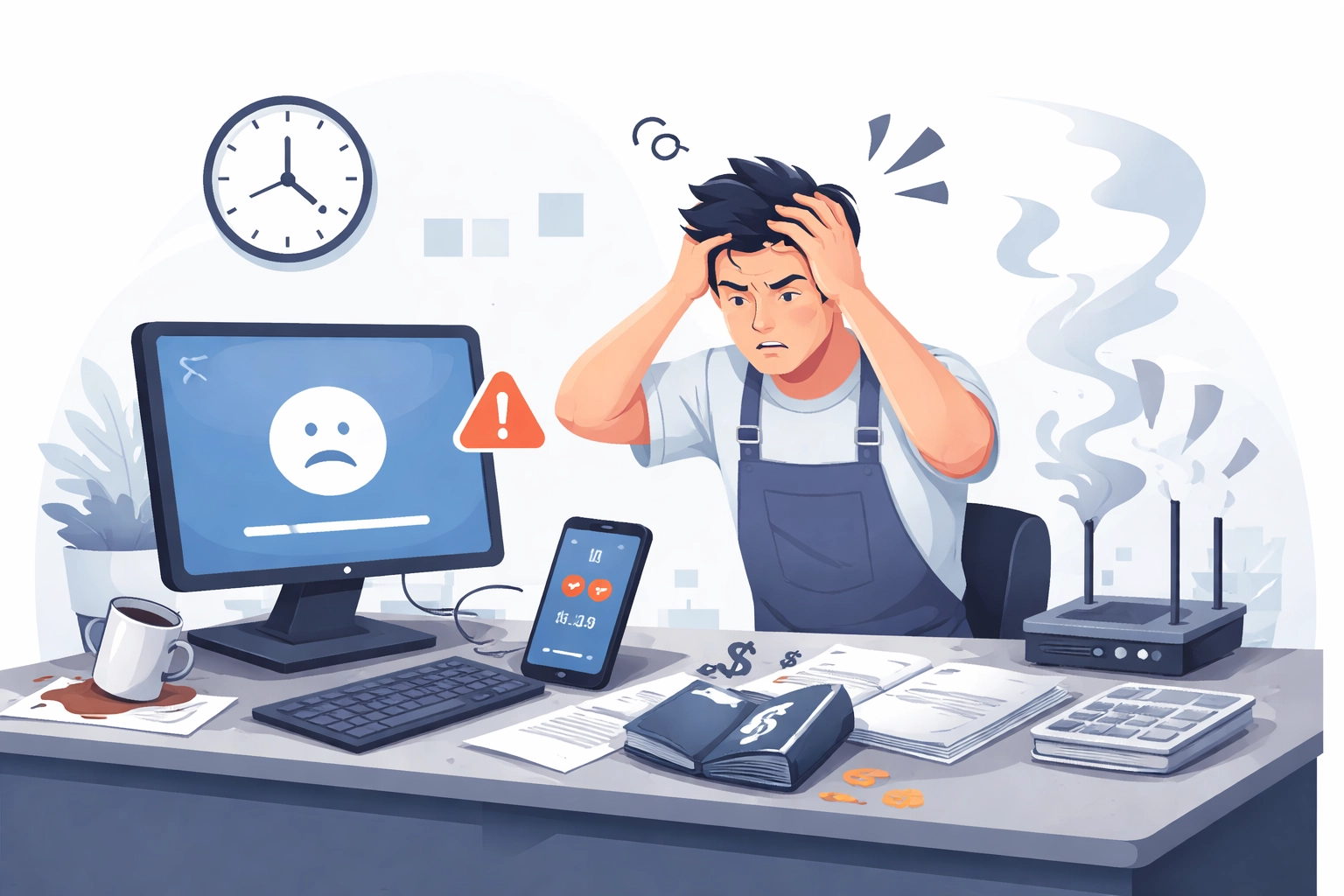
Budget IT providers typically charge somewhere between $125 and $150 per hour, which seems affordable compared to monthly managed services. But that number doesn't tell the whole story.
The Hidden Costs You're Not Seeing
Let's get into the nitty-gritty. Here are the real expenses that come with "cheap" IT, the ones that don't show up on that initial quote.
1. Downtime Is a Business Killer
Every minute your systems are down, you're losing money. Industry estimates put the cost of downtime at around $5,600 per minute, and for some businesses, that number climbs even higher.
Think about it: If your point-of-sale system crashes during a busy Saturday in downtown Petoskey, or your dental practice management software goes dark in Alpena, how much revenue walks out the door? How many customers lose trust?
Budget IT providers often have response times of 4 to 6 hours. That's a lot of lost productivity, frustrated employees, and potentially angry customers.
2. The Reactive Cycle Never Ends
When your IT strategy is purely reactive, you're always putting out fires. There's no time (or budget) left for improvements, upgrades, or planning ahead.
This creates a vicious cycle:
- Old equipment breaks down more often
- Software falls behind on updates
- Security vulnerabilities pile up
- You end up spending more on emergency fixes than you would have on prevention
It's like skipping oil changes on your car and then wondering why the engine blew up.
3. Weak Security = Big Risk
Here's where things get really scary. Budget IT services often skip the essentials:
- No continuous monitoring
- No regular vulnerability assessments
- No compliance checks (critical for healthcare, legal, or financial businesses)
That leaves your business wide open to ransomware attacks, data breaches, and phishing scams. And in 2026, cybercriminals aren't just targeting the big guys, they're going after small businesses because they know the defenses are weaker.
A single breach can cost tens of thousands of dollars in recovery, legal fees, and lost customer trust. Suddenly, that cheap hourly rate doesn't seem like such a great deal.

4. Surprise Fees Add Up Fast
Ever gotten a bill with charges you didn't expect? With budget IT providers, "out-of-scope" fees are practically a business model.
Watch out for extra charges for:
- On-site visits
- After-hours support
- Security patches and updates
- Adding new users or devices
- Moving workstations
- Pretty much anything that wasn't explicitly in the original agreement
These surprises can turn a $150 service call into a $500+ invoice before you know it.
The Proactive Approach: What's Different?
Proactive IT support flips the script. Instead of waiting for things to break, a managed service provider (MSP) actively monitors, maintains, and protects your systems around the clock.
Here's what that typically includes:
- 24/7 monitoring to catch problems before they cause downtime
- Regular patching and updates to keep software secure and running smoothly
- Strategic planning so your technology grows with your business
- Flat, predictable monthly pricing with no surprise fees
- Fast response times, we're talking 15 minutes for emergencies, not 4 hours
The goal isn't just to fix problems. It's to prevent them from happening in the first place.
ROI vs. Hourly Rates: Let's Do the Math
Okay, let's talk numbers. Because at the end of the day, this is a business decision.
Reactive IT (Break-Fix Model):
- $125–$150 per hour
- 4–6 hour average response time
- Hidden fees for emergencies, after-hours, and "extras"
- No preventive maintenance
- Higher risk of extended downtime and security incidents
Proactive IT (Managed Services):
- $150–$200 per workstation per month (flat rate)
- 15-minute emergency response
- All-inclusive pricing, no surprises
- Continuous monitoring and maintenance
- Strategic IT planning included
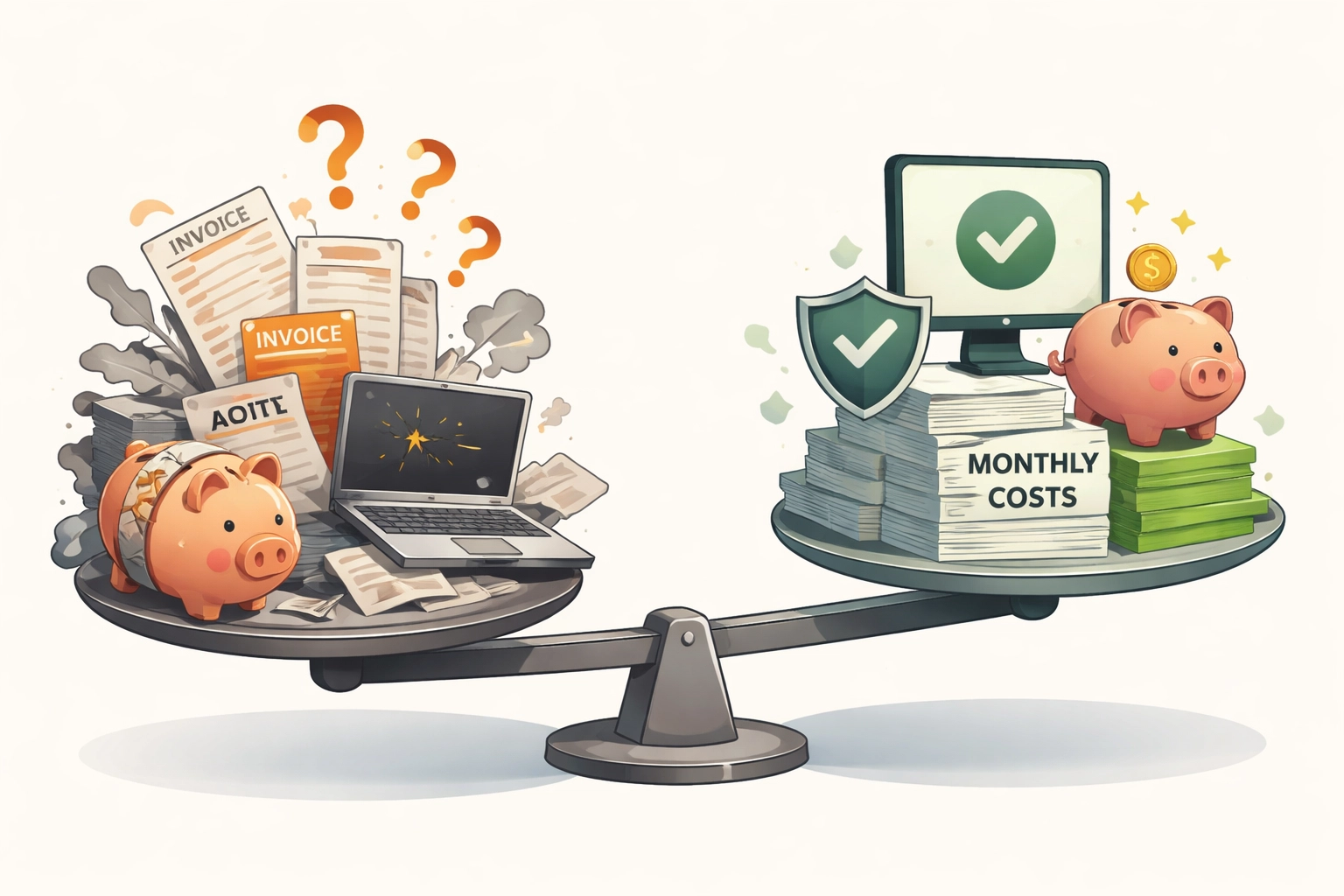
Let's say you have 10 workstations. At $175 per workstation, you're looking at $1,750 per month for proactive support. That's $21,000 per year.
Sounds like a lot? Consider this: a single day of downtime could cost you more than that. One ransomware attack could cost you ten times that. And the peace of mind that comes from knowing your systems are protected? That's priceless.
Questions to Ask Yourself
Not sure if it's time to make the switch? Here are a few questions to consider:
- How much time do you spend dealing with IT issues? Time you spend troubleshooting is time you're not spending on your actual business.
- When was the last time someone reviewed your security? If you can't remember, that's a red flag.
- Do you have a technology roadmap? Or are you just reacting to whatever breaks next?
- Are your backups actually working? When's the last time someone tested them?
- Is your current IT provider helping you grow, or just keeping the lights on?
If any of these questions made you pause, it might be time for a conversation.
Why Northern Michigan Businesses Are Making the Switch
Here in Petoskey, Gaylord, Cheboygan, and Alpena, we're seeing more and more businesses move away from the break-fix model. And it's not just about avoiding headaches (though that's definitely part of it).
It's about turning IT from a constant source of stress into a competitive advantage. It's about having a partner who understands your business and helps you plan for the future. It's about knowing that when something does go wrong, someone's got your back, fast.
That's the difference between reactive and proactive. Between "cheap" and actually cost-effective.
Ready to See What Proactive IT Looks Like?
At NTS, we've been helping Northern Michigan businesses get more from their technology for years. We know the unique challenges you face: from seasonal fluctuations to limited local resources: and we're here to help you navigate them.
If you're curious about what proactive IT support could do for your business, let's talk. We offer free assessments with no pressure and no obligation. Just a straightforward conversation about where you are, where you want to be, and how to get there.
Try NTS free and see the difference for yourself. Because your business deserves better than "cheap."